A new squeal, clunk, rattle or hum can make every drive feel uncertain. Some sounds come from minor vibration or normal operation, while others are early warnings of wear, a loose component or a problem that could affect the way the car steers, stops or keeps its engine cool.
The sound alone rarely proves which part has failed. Location, timing, vehicle speed, engine temperature and what you are doing when the noise appears all matter. A clunk while driving over a bump points the inspection in a different direction from a clunk heard when changing between drive and reverse. The most useful response is to record the conditions and arrange an inspection rather than buying a part based on a guess.
This guide explains ten common car noises, what systems a mechanic may investigate and when Hoppers Crossing drivers should stop rather than continue to the workshop. It is general information only: the safe response always depends on the exact vehicle, warning lights and symptoms.
The important points
- Describe when the noise occurs—starting, accelerating, braking, turning, changing gear or travelling over bumps.
- A recording can help demonstrate an intermittent sound, but it cannot replace a physical inspection.
- Grinding brakes, sudden steering changes, overheating, smoke or a critical red warning should be treated as urgent.
- Do not reach near a running engine, touch a hot wheel or exhaust, or crawl under a vehicle to find a noise.
- Book the concern as a noise diagnosis, not only a routine service, so the workshop can allow suitable inspection time.
Before the workshop: describe the sound like a useful clue
A mechanic does not expect you to name the failed component. A simple description of what you hear and when it happens is more valuable. Words such as squeal, scrape, grind, clunk, knock, click, tick, rattle, hum and hiss help establish the character of the noise, but the operating conditions narrow the search.
Note whether the car is cold or fully warmed up, stationary or moving, travelling slowly or at freeway speed. Record whether the sound changes when you brake, turn the steering wheel, accelerate, lift off the accelerator, switch on the air conditioning or travel over a rough surface. If it seems to follow road speed or engine speed, mention that too.
A short phone recording may help when a sound is intermittent, provided it can be captured without distracting the driver. Do not hold a phone while driving or ask a passenger to lean near moving parts. Also note recent work, a pothole strike, a flat battery, a tyre change or any warning light that appeared around the same time.
1. Squealing or squeaking when you apply the brakes
A repeated squeal while braking may relate to brake-pad wear indicators, friction material, dust, glazing, vibration or contamination. A brief sound after rain or an overnight park can sometimes come from surface moisture on the rotors, but a noise that persists, becomes louder or appears with changed braking deserves an inspection.
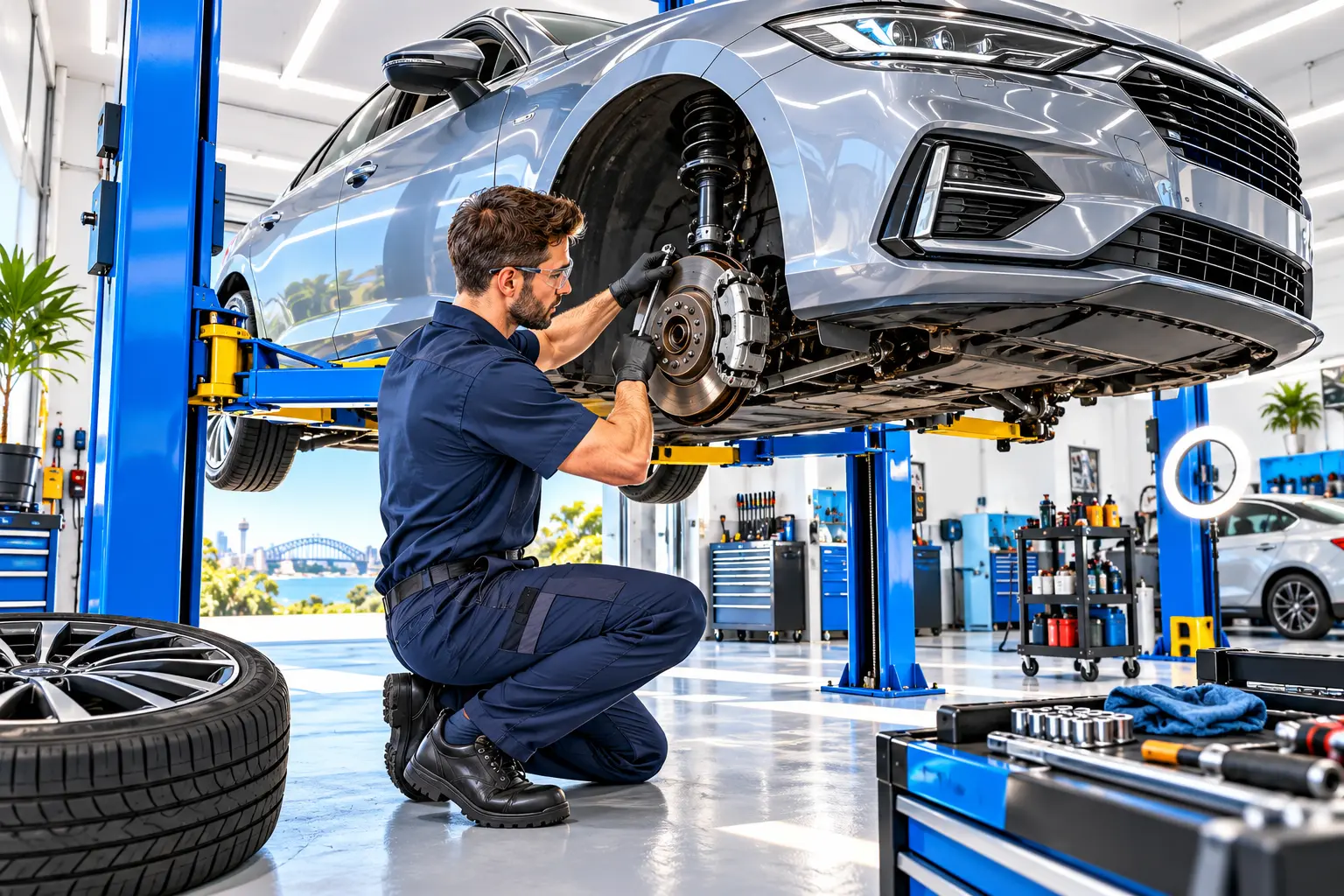
The workshop may inspect pad thickness, rotor condition, caliper movement, hardware and signs of uneven wear. Tyres, wheel bearings and suspension can also create noises that seem to come from the brakes, so replacing pads without checking the surrounding system can miss the real cause.
If the pedal feels different, the car pulls, stopping distance increases or a brake warning appears, treat the change as more than an annoying sound. If you are not confident the vehicle will stop normally, do not keep driving it to test the noise.
2. Grinding or scraping from a wheel
Grinding is a rougher sound than a squeal and should not be ignored. During braking it can indicate severely worn or damaged friction components, a sticking part, debris or metal contacting a surface it should not. A scrape that changes with wheel speed can also come from a backing plate, wheel bearing, tyre contact or another rotating component.
Do not assume the loudest side is the failed side; sound travels through the body and suspension. A mechanic may need to raise the vehicle safely, inspect each wheel and rotate components by hand before road-testing it.
Grinding accompanied by poor braking, steering vibration, a hot smell, smoke or one wheel that seems unusually hot can be urgent. Stop safely, keep clear of hot components and contact a workshop or roadside provider rather than continuing until the noise becomes constant.
3. Clunking or knocking when driving over bumps
A clunk over speed humps, driveway entries or broken road surfaces often directs attention toward suspension, steering, mounts, bushes, ball joints, sway-bar links or a loose exhaust component. Items in the boot, a spare wheel or a jack can make a surprisingly convincing mechanical noise too, so secure loose cargo before the appointment.
The exact moment matters. A noise as one wheel rises may suggest a different loading point from a clunk when the body settles after the bump. If the car also wanders, pulls, bounces repeatedly, feels unstable or develops uneven tyre wear, mention those symptoms when booking.
Suspension and steering parts work together to keep the tyre controlled and the vehicle predictable. A workshop inspection may involve checking for movement, damaged rubber components, leaks, broken mounts and witness marks where parts have been contacting.
4. Clicking when turning at low speed
A repeated click or knock on tight turns can be associated with a driveline or steering component, including a CV joint on many front-wheel-drive and all-wheel-drive vehicles. It may be most noticeable in a car park with the steering turned and light power applied.
That pattern is useful, but it is not a complete diagnosis. Tyre contact, wheel fasteners, bearings, steering stops, suspension joints and loose trim can create similar sounds. Tell the mechanic whether the click changes between left and right turns, appears only under acceleration or continues when coasting.
If the clicking began after wheel, tyre or suspension work, say so immediately. If the steering binds, shakes, feels loose or produces a heavy knock, seek advice before driving further.
5. Humming, droning or growling that rises with road speed
A hum that becomes faster or louder as the vehicle speeds up may be related to tyres, a wheel bearing or another rotating driveline component. Uneven tyre wear can create a drone that changes across different road surfaces, while bearing noise may change as cornering loads one side of the vehicle. Those are clues rather than rules.
Note whether the sound follows road speed even when engine revs change. Mention vibration through the steering wheel, seat or floor, and check whether a tyre-pressure warning has appeared. Do not deliberately weave across lanes to make the noise change.
Tyres should be inspected for damage, unusual wear and correct cold pressure using the vehicle placard. A workshop can then check wheel condition, bearing movement and related steering or suspension parts using safe lifting equipment.
6. A high-pitched squeal from the engine bay
A sharp squeal at startup, during acceleration or when an accessory switches on can involve a drive belt, tensioner, pulley, bearing or accessory. Wet conditions and temperature may change the sound, which is why it helps to note whether the squeal happens only on the first cold start or returns throughout the trip.
Belts and pulleys operate close to moving fans and other hazards. Do not reach into the engine bay while the engine is running, spray products onto a belt or try to listen with loose clothing near rotating parts. A workshop can inspect belt condition and alignment, check tensioning components and isolate accessories where appropriate.
If the sound is joined by a charging warning, rising engine temperature, heavy steering on a hydraulically assisted system or visible belt damage, stop and seek vehicle-specific advice. On some vehicles, one drive system supports several essential functions.
7. Ticking or tapping under the bonnet
Some engines and fuel systems make a regular tick during normal operation. A new, louder or irregular tapping sound can still justify inspection, particularly if it follows an overdue service, low oil warning, hard start or change in performance.
Possible areas include lubrication, valve-train components, injectors, an exhaust leak or an accessory, but the sound needs to be assessed in the context of that engine. The correct oil specification, level and service history matter. Check the level only as directed by the owner’s manual, on safe level ground and away from hot or moving parts.
Do not try to quiet a new tick with a random additive. Record when it occurs and arrange diagnosis so the cause can be supported by inspection or testing.
8. Deep knocking, pinging or metallic sounds from the engine
A deep knock or sharp metallic sound under load can have several causes, from combustion-related pinging to internal engine or accessory problems. Fuel quality, temperature, oil pressure, timing, sensor information and mechanical wear may all need to be considered.
Reduce load and do not keep accelerating hard to reproduce the sound. If a knock is sudden, loud or accompanied by an oil-pressure warning, overheating, rough running, smoke or significant power loss, pull over safely and switch the engine off. Continuing to run an engine with a serious lubrication or temperature problem can greatly increase damage.
A mechanic may check fluid level and condition, scan for faults, listen at controlled engine speeds and carry out targeted pressure, electrical or mechanical testing. The aim is to identify why the sound is present rather than replace the first component mentioned by an online search.
9. Rattling from underneath the car
A light metallic rattle underneath can come from an exhaust shield, bracket, exhaust component or another loose item. It may appear at a particular engine speed, while idling, on rough roads or when the exhaust changes temperature.
A heavier rattle can involve different systems, including suspension, driveline mounts or damaged underbody panels. Because exhaust parts become extremely hot and a vehicle must never be entered underneath when supported only by its emergency jack, this is a job for proper workshop access.
Tell the mechanic if the sound followed contact with road debris, a deep pothole or recent exhaust work. Also report exhaust smell inside the cabin, loss of power or a rattle that becomes a bang, as those details can change the urgency.
10. Hissing or whistling after startup or while accelerating
A hiss can be as simple as air moving through a system, but a new sound may point toward an air, vacuum, cooling or pressure leak. A whistle that appears with acceleration may require checks of intake hoses, clamps and pressure-related systems on applicable engines.
The surrounding symptoms are important. Rough idle, reduced power, a warning light or changed fuel use suggests a different investigation from a hiss heard after switching the engine off. Steam, coolant smell or rising temperature can indicate a cooling-system concern and should not be investigated by opening a hot pressurised cap.
If hissing is accompanied by a strong fuel or LPG smell, smoke, rapid fluid loss or overheating, stop safely, switch the vehicle off and seek advice. Keep ignition sources away and do not continue driving simply because the car still moves.
When a strange car noise means you should stop driving
Noise becomes more urgent when it appears with a change in control, temperature, warning lights or visible damage. Stop somewhere safe and contact a workshop or roadside provider if the brakes feel ineffective, steering changes suddenly, the vehicle shakes heavily, a tyre is damaged, the engine overheats, smoke appears or a critical red warning remains on.
A loud new knock, repeated heavy grinding, a wheel that becomes extremely hot, rapid fluid loss or strong fuel or LPG odour also deserves immediate advice. The safe decision depends on the vehicle and the full symptom, so explain what happened rather than asking only whether a particular sound is normal.
Do not crawl underneath, remove a wheel at the roadside unless trained and safe to do so, or place hands near moving engine components. If there is doubt about safe braking, steering or engine operation, transporting the car is safer than driving it to prove the fault.
How a workshop traces an unusual noise
Diagnosis begins with the information you provide. The mechanic may try to reproduce the sound during a controlled road test, inspect the vehicle under bright workshop lighting and then focus on the system that matches the conditions. A noise during braking requires different checks from one at idle or over bumps.
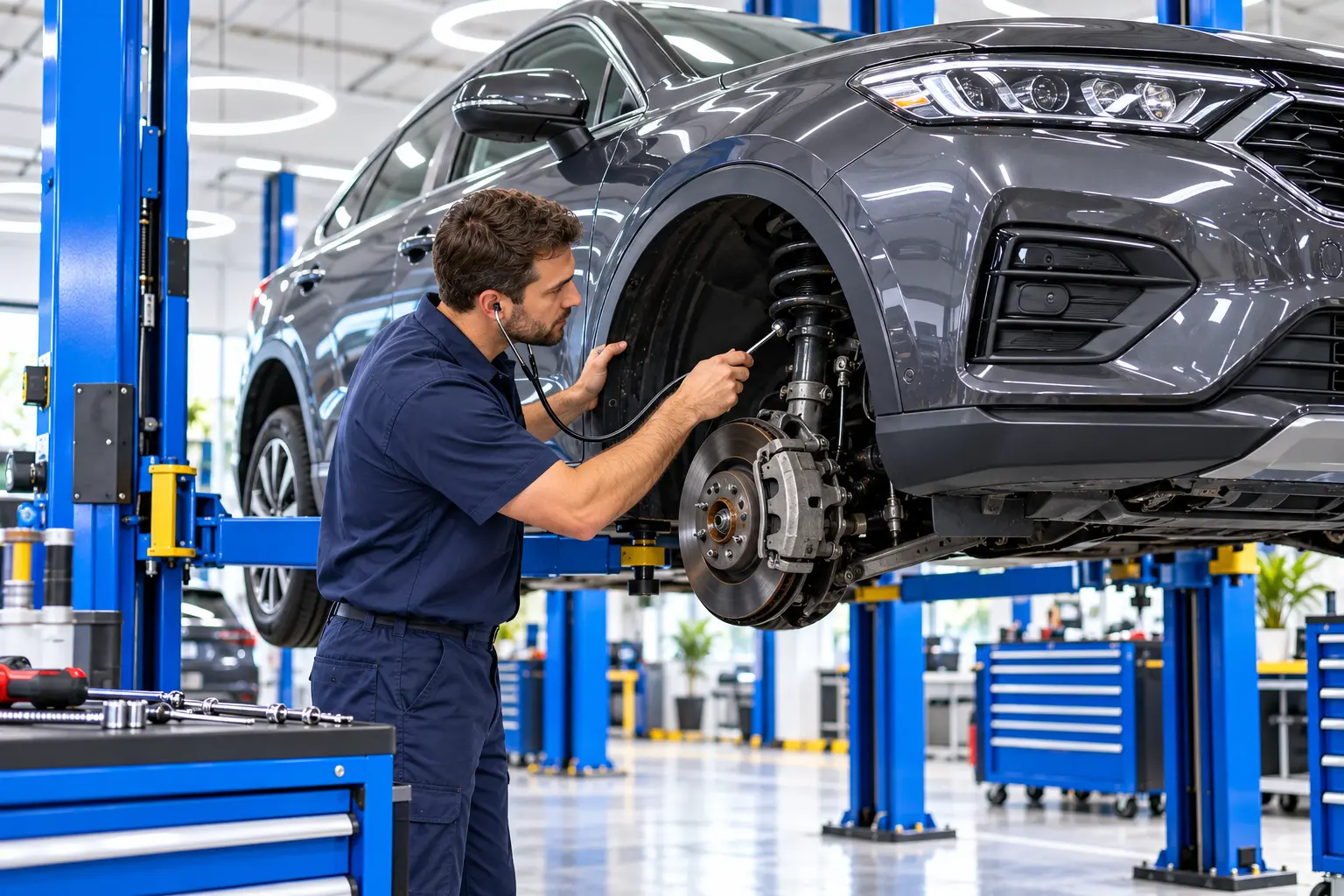
Safe lifting makes it possible to inspect tyres, brakes, wheel bearings, steering, suspension, underbody panels and exhaust components. Engine-bay diagnosis may involve a scan, live data, fluid checks, listening tools or targeted electrical and mechanical tests. Intermittent sounds sometimes require the vehicle to be cold, hot or driven long enough for the symptom to appear.
Ask the workshop to explain what has been confirmed and what remains uncertain. If further dismantling or diagnostic time is needed, the scope should be discussed before additional work proceeds. A video may point technicians toward the area, but the repair decision should still be based on evidence from the vehicle.
Book a strange-noise inspection in Hoppers Crossing
Total Care Mobile Mechanics is based at 7 Industrial Avenue, Hoppers Crossing. Our focus is booking vehicles into the workshop, where proper lighting, safe lifting equipment and diagnostic tools make it easier to inspect the source of an unusual sound.
When you call, have the registration, make, model, current kilometres and recent service history ready. Describe the sound, where it seems to come from and exactly when it happens. Mention every warning light or change in braking, steering, temperature and performance so the correct type of booking can be planned.
Drivers from Hoppers Crossing, Point Cook and surrounding Wyndham and Hobsons Bay suburbs can call 0402 755 303. If the vehicle feels unsafe, ask whether it should be transported rather than driven to the workshop.
What drivers ask us.
Can a mechanic diagnose a car noise from a recording?+
A recording can show the type and timing of an intermittent noise, but it rarely proves the cause. The mechanic still needs the vehicle details, operating conditions and a physical inspection or targeted test before recommending parts.
Is a squealing noise always caused by the brakes?+
No. Brake components are one possibility when the sound occurs during braking, but tyres, belts, bearings, suspension and other moving parts can also squeal. Note exactly when the sound appears and have the relevant systems inspected.
Why does my car clunk when I drive over bumps?+
Possible areas include suspension bushes, links, joints, mounts, steering components, exhaust parts or even unsecured items in the boot. An inspection is needed because several faults can create a similar clunk.
Can I keep driving if my car is making a grinding noise?+
Do not assume grinding is safe. If it occurs with poor braking, steering changes, vibration, heat, smoke or visible damage, stop safely and seek advice. Even without those symptoms, arrange a prompt inspection rather than waiting for it to worsen.
Will a routine car service include diagnosis of a strange noise?+
A service may identify visible wear, but tracing a specific or intermittent noise can require separate diagnostic time. Describe the concern when booking so the workshop can plan the appropriate inspection instead of discovering it at vehicle collection.