An engine is designed to operate within a controlled temperature range. When the cooling system cannot move and release heat properly, the temperature can rise quickly. What begins as a slow leak, tired pressure cap or failed fan can become a much larger engine repair if the vehicle is repeatedly driven while overheating.
The temperature gauge is only one clue. Coolant smell, a warning message, steam, a heater that suddenly blows cold, repeated top-ups or a cooling fan that behaves differently can all justify an inspection. None of those symptoms identifies one failed part by itself, which is why testing is more reliable than replacing the first component mentioned in an online search.
This guide explains common overheating signs, what to do safely and how radiator and cooling-system diagnosis works at a workshop. It is general information only. Follow the owner’s manual for your exact vehicle and use roadside assistance if the car cannot maintain a normal temperature.
The important points
- Stop safely if the temperature rises abnormally, a temperature warning appears or steam is visible.
- Never remove a cap from a hot pressurised cooling system; escaping coolant can cause serious burns.
- Overheating can involve coolant loss, the radiator, hoses, pressure cap, thermostat, water pump, cooling fans or an engine fault.
- Repeatedly topping up coolant without locating the leak can hide a worsening problem.
- Pressure testing and targeted workshop checks help identify the cause before parts are recommended.
The main warning signs of an overheating car
A gauge moving above its normal position or a temperature warning on the dashboard is the clearest sign, but drivers should also pay attention to changes around it. Steam from under the bonnet, a sweet chemical smell, visible coolant, reduced heater performance or a cooling fan running unusually often can indicate that the system is struggling.
Some vehicles use a gauge, some rely mainly on warning lamps, and others display a temperature message. Learn what normal looks like for your car before a problem occurs. If a red temperature warning appears, the gauge enters the hot zone or the display tells you to stop, treat that instruction seriously.
Overheating may be intermittent. It can appear only in traffic, while climbing a hill, when towing, with the air conditioning operating or after a long drive. Record those conditions for the mechanic because they help separate an airflow or fan-related issue from a fault that occurs under all driving conditions.
- Temperature gauge higher than its normal position
- Red temperature warning or overheating message
- Steam or vapour from the engine bay
- Sweet coolant smell inside or outside the car
- Coolant puddles or repeated reservoir top-ups
- Cabin heater suddenly blowing cold while the engine is hot
What to do if the temperature rises while driving
Move away from traffic and stop somewhere safe as soon as practical. Switch the engine off and follow the owner’s manual. If smoke, heavy steam or fluid is escaping, keep clear of the engine bay and arrange roadside help. Do not continue driving simply because the destination or workshop is nearby.
Never remove a radiator, expansion-tank or pressure cap while the system is hot. A pressurised cooling system can release boiling coolant and steam without warning. Opening the bonnet may also expose you to hot surfaces, moving fans or fluid. Electric cooling fans can sometimes operate even when the engine is not running.
Advice sometimes suggests turning the cabin heater on to remove heat. That may provide a temporary indication or small reduction on some vehicles, but it is not a repair and should never be used to justify continuing with a serious warning. The safe priority is to stop and prevent further heat-related damage.
Coolant loss and visible leaks
Coolant can escape from a hose, clamp, radiator seam, plastic tank, thermostat housing, water pump, heater component, pressure cap or another connection. The leak may leave a coloured stain or puddle, but not every loss reaches the ground. A small amount can evaporate on a hot component, leak only when pressurised or enter an area that is not immediately visible.
Repeatedly topping up the reservoir is not normal maintenance if the level continues to fall. It can buy time while the cause becomes worse and can introduce the wrong coolant mix if random products are combined. Different coolant technologies are not automatically compatible, so use only the specification and procedure stated for the vehicle.
Tell the workshop where the liquid appeared, its colour and smell, and whether the level changed while the engine was cold. Photographs of the parking spot can be useful. Do not taste or touch an unknown fluid; coolant can be toxic and should be kept away from children and animals.
Radiator, hoses and pressure-cap problems
The radiator releases heat from the coolant as air moves through its core. External damage, internal restriction, corrosion, blocked airflow or a leaking seam can reduce its ability to do that job. Debris between heat exchangers can also affect airflow, but cleaning must be done carefully because delicate fins are easy to damage.
Rubber hoses and plastic connections live through repeated heating and cooling cycles. They can soften, swell, crack or leak around a fitting. A hose that looks acceptable when cold may change shape under temperature and pressure. The pressure cap is also part of the system: an incorrect or failed cap can alter pressure control and coolant movement.
Replacing a radiator without checking why the vehicle overheated can miss the actual cause. The fan, thermostat, water pump, coolant condition and engine behaviour may all need to be considered before the repair is confirmed.
Thermostat, water-pump and cooling-fan faults
The thermostat controls coolant flow as the engine warms. If it does not open as intended, the engine can overheat even when the radiator and coolant level appear normal. If it remains open, the engine may warm slowly, use more fuel or provide weak heater performance, depending on the vehicle.
The water pump circulates coolant through the engine and heat exchangers. Pump faults can involve leakage, bearing noise, damaged drive components or reduced circulation. Some pumps are mechanically driven and others are electric, so the testing method and related symptoms vary.
Cooling fans are especially important at low road speed, where natural airflow is limited. A fault in the fan motor, relay, fuse, controller, wiring, temperature input or air-conditioning command can cause overheating in traffic while the temperature seems normal on the freeway. Electrical testing and live vehicle data can help identify whether the fan is being commanded and whether it responds.
When overheating can point to a deeper engine problem
Not every overheating event begins in the radiator. Combustion gases entering the cooling system, a failed sealing surface, internal coolant loss or another engine condition can create pressure, repeated coolant loss, misfiring or contamination. White exhaust vapour after the engine is fully warm, unexplained reservoir bubbling, milky residue or persistent pressure may require deeper investigation, but none is conclusive on its own.
Likewise, a previous overheat can cause secondary damage even after the original leak is repaired. The workshop may need to check whether the system holds pressure, whether cooling fans and circulation operate correctly and whether the engine shows signs of a sealing problem. Testing should guide the repair rather than assuming the worst from one symptom.
If the car has severely overheated, shut down, lost power, mixed fluids or produced heavy white exhaust, do not keep restarting it to see whether the warning returns. Explain the full event and arrange appropriate inspection or transport.
Why the cabin heater can change during a cooling fault
The cabin heater commonly uses hot engine coolant passing through a small heat exchanger. If the coolant level becomes too low or circulation is interrupted, the vents may suddenly blow cool air even while the engine temperature rises. That combination can be an important warning rather than a comfort-system fault.
A sweet smell inside the cabin, misting glass or damp carpet can also point toward a heater-system leak on some vehicles. Turn off the demister only if visibility remains safe, avoid contact with the fluid and seek advice. A leaking heater component still affects the engine cooling circuit.
Heater performance alone does not identify the failed part. Air-control doors, climate electronics and the air-conditioning system can create separate temperature complaints, so the engine temperature and coolant behaviour need to be considered alongside the cabin symptom.
How a workshop diagnoses an overheating problem
Diagnosis starts with the event: how quickly the temperature rose, whether it happened in traffic or at speed, what warning appeared and whether coolant was added. Once the vehicle is safely cold, the technician can inspect accessible hoses, the radiator, reservoir, cap area, drive components and evidence of leakage or contamination.
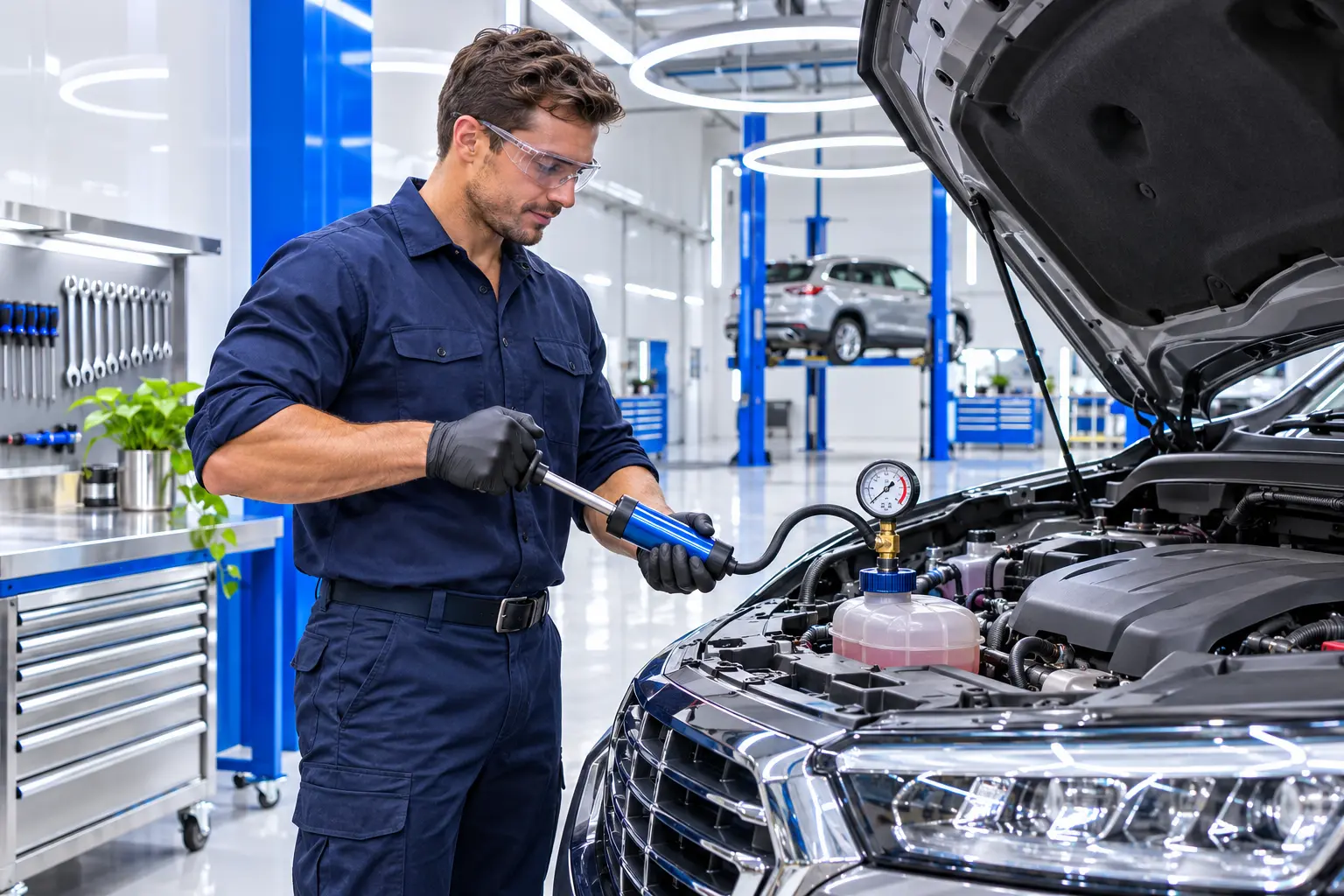
Pressure testing may reveal a leak that appears only when the system is pressurised. The mechanic may also check fan command and operation, thermostat behaviour, coolant circulation, vehicle data and the condition or concentration of the coolant. Depending on the symptoms, further testing may investigate combustion gases, electrical control or internal engine condition.
The objective is to connect the test result to the symptom. A stain near one component may be an old residue rather than the active leak, and a stored fault code may be a consequence of overheating rather than the original cause. After repair, the system should be refilled and bled using the correct method, then checked under appropriate operating conditions.
Cooling-system maintenance before Melbourne heat
Hot weather adds load, but a healthy cooling system is designed to manage normal summer operation. Problems often appear when an existing weakness—low coolant, restricted airflow, an ageing hose, a marginal fan or an overdue fluid change—is exposed by traffic, air-conditioning load or a long trip.
Check the level only when the vehicle is cold and exactly as the owner’s manual describes. Look for fresh stains under the usual parking place and note any temperature change, sweet smell or fan behaviour. Do not rely on coolant colour alone to judge its condition, and do not mix products simply because they appear similar.
Include the cooling system in routine servicing and mention any history of overheating. Before towing, a summer road trip or heavy use, allow time for inspection and repair rather than waiting until departure day, when parts and testing time may be harder to arrange.
Book radiator repairs in Hoppers Crossing near Point Cook
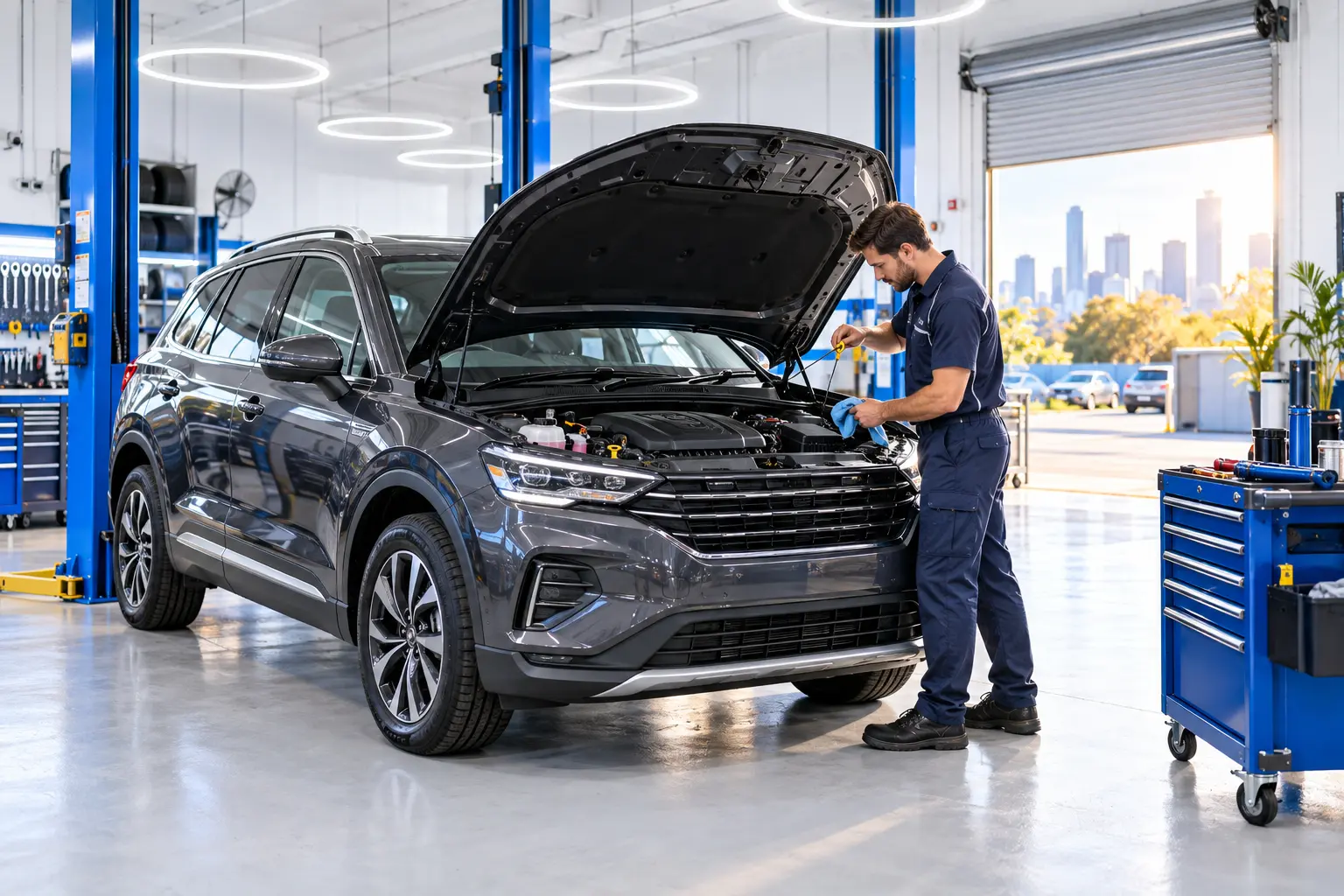
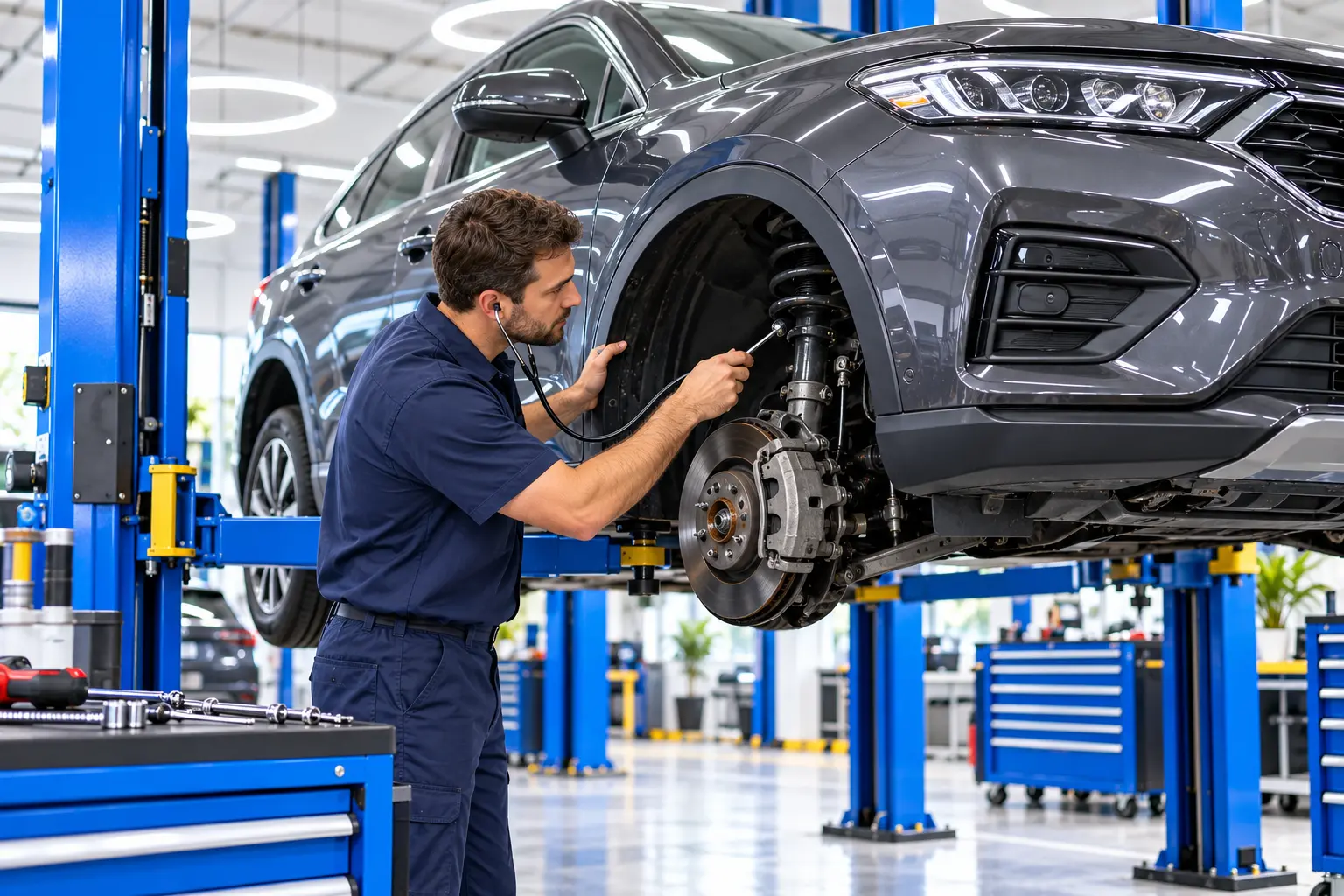
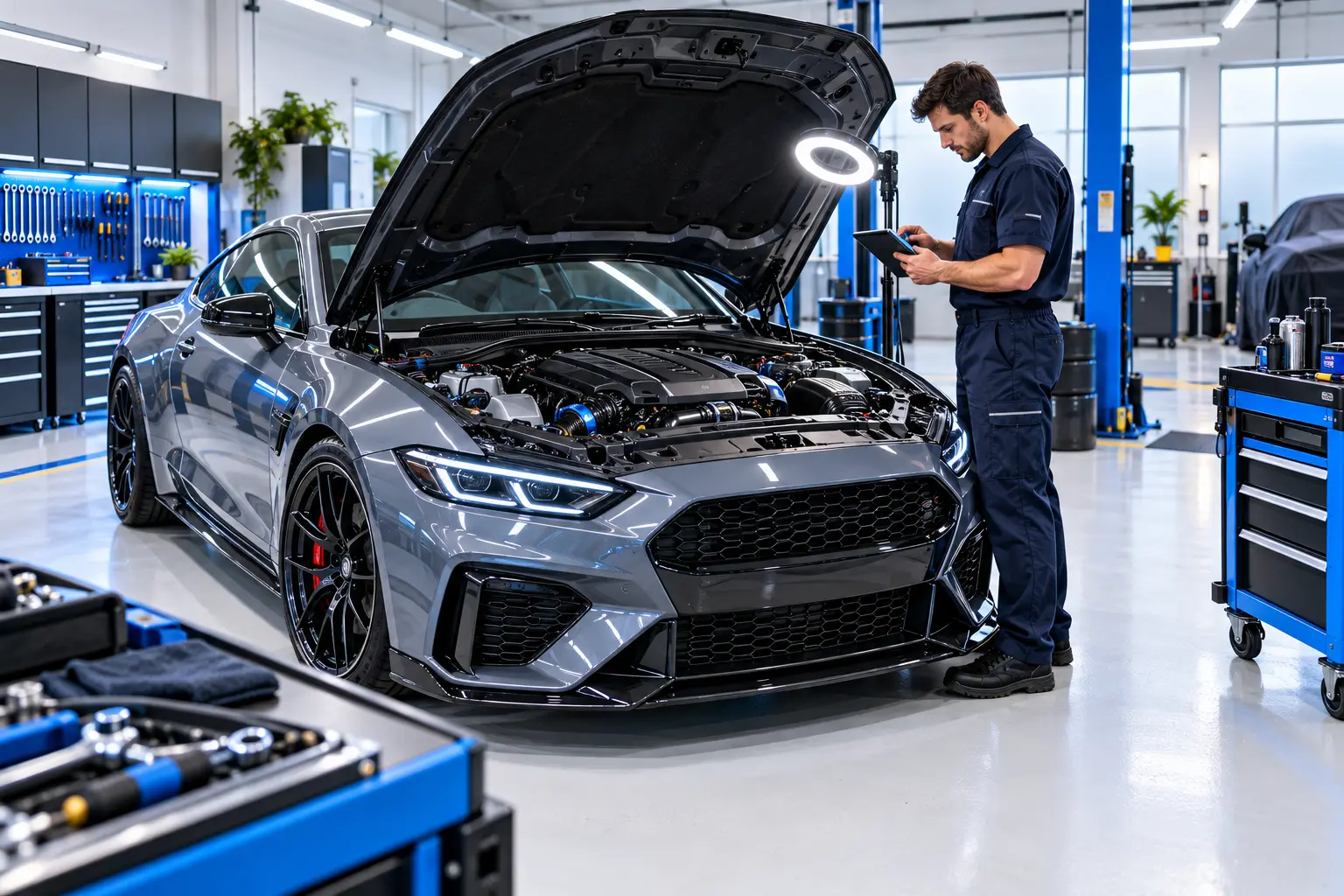
Total Care provides radiator and cooling-system diagnosis at 7 Industrial Avenue, Hoppers Crossing VIC 3029. Strong workshop lighting, safe access and testing equipment help us inspect leaks, fan operation and related components before recommending a repair.
When booking, describe the exact warning, gauge position, driving conditions, coolant loss and anything recently repaired. Tell us immediately if the vehicle cannot maintain a normal temperature or may be unsafe to drive. Do not risk further engine damage by driving it to the workshop without advice.
Hoppers Crossing and nearby Point Cook drivers can phone 0402 755 303 to arrange a workshop time. We also handle general mechanical repairs, engine diagnostics, scheduled servicing and brake work, so related symptoms can be considered as part of the same vehicle history.
What drivers ask us.
Can I drive a short distance if my car is overheating?+
Continuing to drive can turn a cooling-system fault into major engine damage. Stop somewhere safe, switch the engine off and follow the owner’s manual or roadside advice. Do not drive to the workshop simply because it is nearby if the car cannot maintain a normal temperature.
Why does my coolant level keep dropping?+
Coolant may escape from hoses, the radiator, pressure cap, water pump, heater circuit or another connection, and some leaks appear only when hot or pressurised. Internal coolant loss is also possible. Repeated topping-up is not a repair; arrange testing to find the cause.
Can I open the coolant cap once I stop?+
Do not open a cap on a hot pressurised cooling system. Boiling coolant and steam can escape and cause serious burns. Allow the vehicle to cool and follow the exact procedure in the owner’s manual or advice from a qualified roadside provider.
Does an overheating car always need a new radiator?+
No. Possible causes include a leak, hose, cap, thermostat, water pump, cooling fan, electrical control, restricted airflow or an engine fault. Diagnosis should identify the cause before a radiator or another component is replaced.
Do you provide radiator repair near Point Cook?+
Yes. Point Cook drivers can book cooling-system and radiator diagnosis at our nearby workshop at 7 Industrial Avenue, Hoppers Crossing. Call 0402 755 303 and explain the temperature warning, coolant loss and whether the car is safe to drive.