A Melbourne summer asks more of a car than many drivers realise. High ambient temperatures, slow holiday traffic, air conditioning running for long periods and fully loaded road trips all place extra demand on systems that may have seemed fine through the cooler months.
That does not mean every car will overheat or break down when the first hot day arrives. It does mean that a weak battery, ageing coolant hose, low fluid level, worn tyre or overdue service can become much harder to ignore once the vehicle is working in sustained heat.
Booking car servicing before summer gives a workshop the opportunity to inspect the vehicle as a complete system. The aim is not to replace parts unnecessarily or promise that a breakdown can never happen. It is to complete due maintenance, find visible wear and give you time to address genuine concerns before the hottest weather and busiest travel period arrive.
The important points
- Follow the manufacturer's time or kilometre service interval—whichever arrives first.
- Cooling-system condition, engine oil, tyres, brakes, battery health and air conditioning all deserve attention before sustained summer heat.
- Book early enough that any required repair can be completed before a holiday drive or heatwave.
- Check tyre pressures when the tyres are cold and use the vehicle placard, not a guess based on appearance.
- If the temperature warning appears or the engine overheats, stop safely and seek advice rather than trying to push through the journey.
Why summer can expose a problem that was already developing
Heat rarely creates a mechanical problem from nothing. More often, it exposes a part or system that was already marginal. A cooling system with a small leak, a battery nearing the end of its useful life or a tyre with low pressure may continue to cope during mild weather, then struggle when the outside temperature and vehicle load rise together.
Melbourne driving can combine several demanding conditions in one day: a cold start in the western suburbs, stop-start traffic across the city, a hot car park and a long freeway run with passengers, luggage and the air conditioner operating. Regular servicing helps establish whether the car is ready for that workload instead of waiting for a warning light or breakdown to provide the answer.
1. The cooling system is your engine's first defence against heat
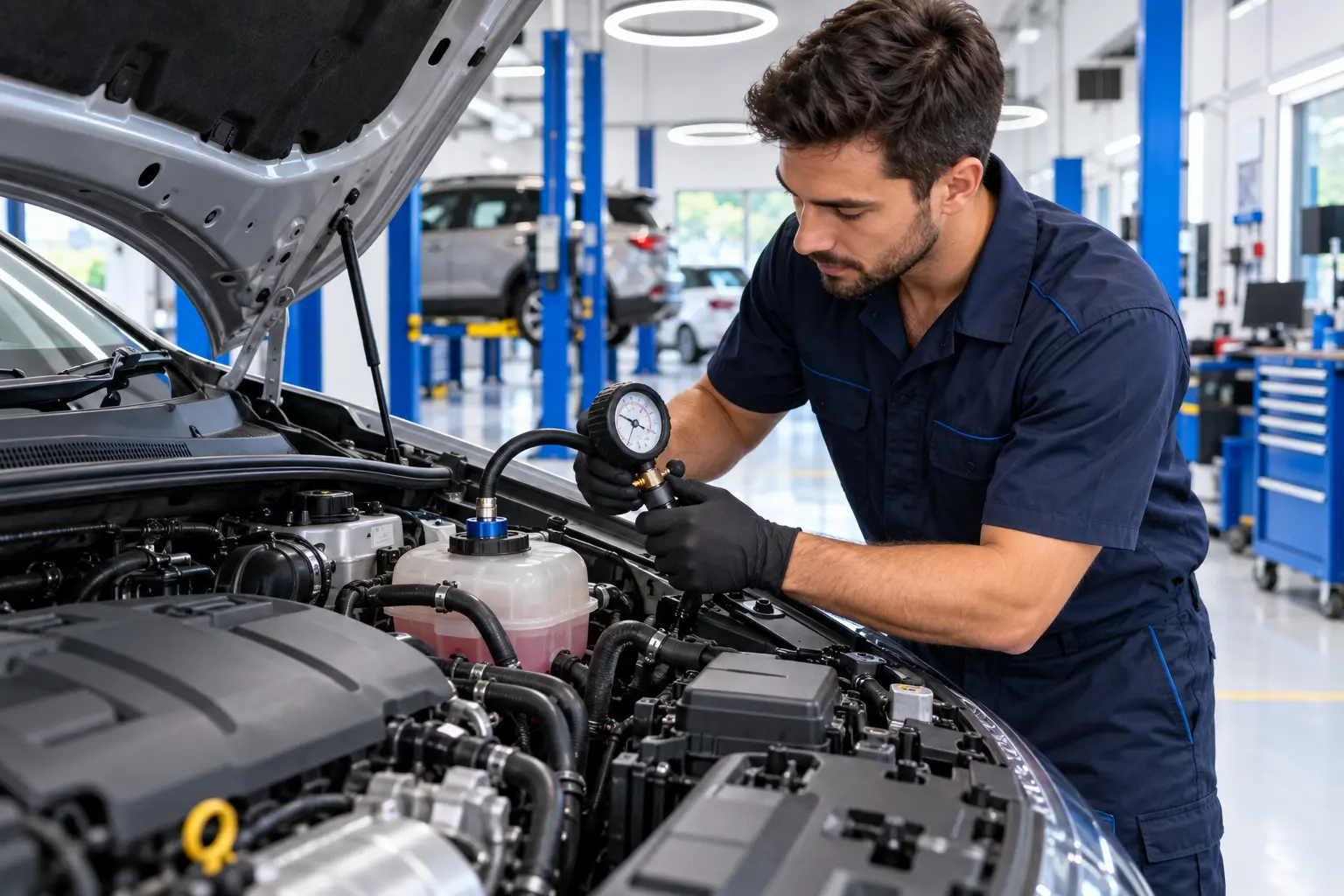
The cooling system carries heat away from the engine through coolant, hoses, the radiator, water pump, thermostat and fans. Every component needs to work together. Low coolant is a warning to investigate, not simply a level to keep topping up, because the missing fluid may point to a leak or another fault.
A workshop can inspect accessible hoses and connections, look for staining or seepage, assess coolant condition, check fan operation and test further when symptoms justify it. The correct coolant specification matters as well; mixing products or filling with an unsuitable fluid can reduce protection and may create compatibility problems.
Never remove a radiator or pressurised coolant cap while the engine is hot. The system can release scalding fluid and steam. If the temperature climbs, a warning appears or coolant is escaping, stop somewhere safe, switch the engine off and seek professional or roadside advice.
2. Engine oil and other fluids need more than a quick glance
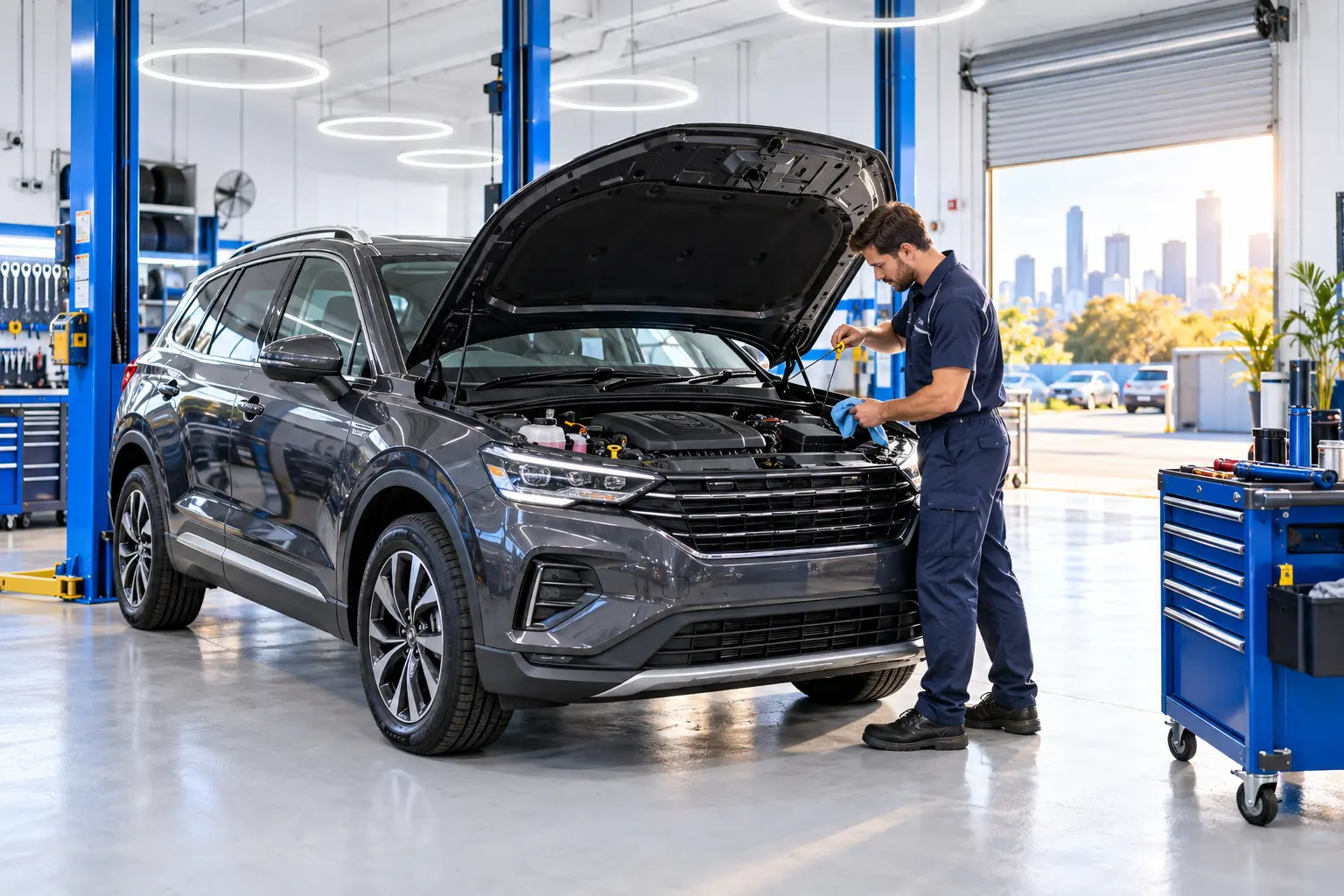
Engine oil lubricates moving parts, helps manage heat and carries contaminants toward the filter. Oil that is overdue, at the wrong level or unsuitable for the engine cannot do its job as intended. A summer service is a good time to confirm whether the oil and filter are due under the manufacturer's schedule and whether any visible leak needs investigation.
Other fluids may include brake fluid, transmission fluid, power-steering fluid on applicable vehicles and windscreen washer fluid. Their service requirements differ by vehicle, and not every reservoir should be opened or topped up casually. A level that has fallen may be a useful clue, so the cause should be considered before fluid is added.
Service history matters here. If the car has missed an interval or you have recently purchased it without clear records, tell the workshop. That context helps the mechanic separate scheduled maintenance from checks that should be prioritised because the history is uncertain.
3. Hot weather can be hard on an ageing battery
Drivers often associate battery failure with cold mornings, but high under-bonnet temperatures can accelerate internal battery deterioration. A battery may still start the car normally today while holding less reserve capacity than it once did, particularly if the vehicle is used for short trips or sits unused for long periods.
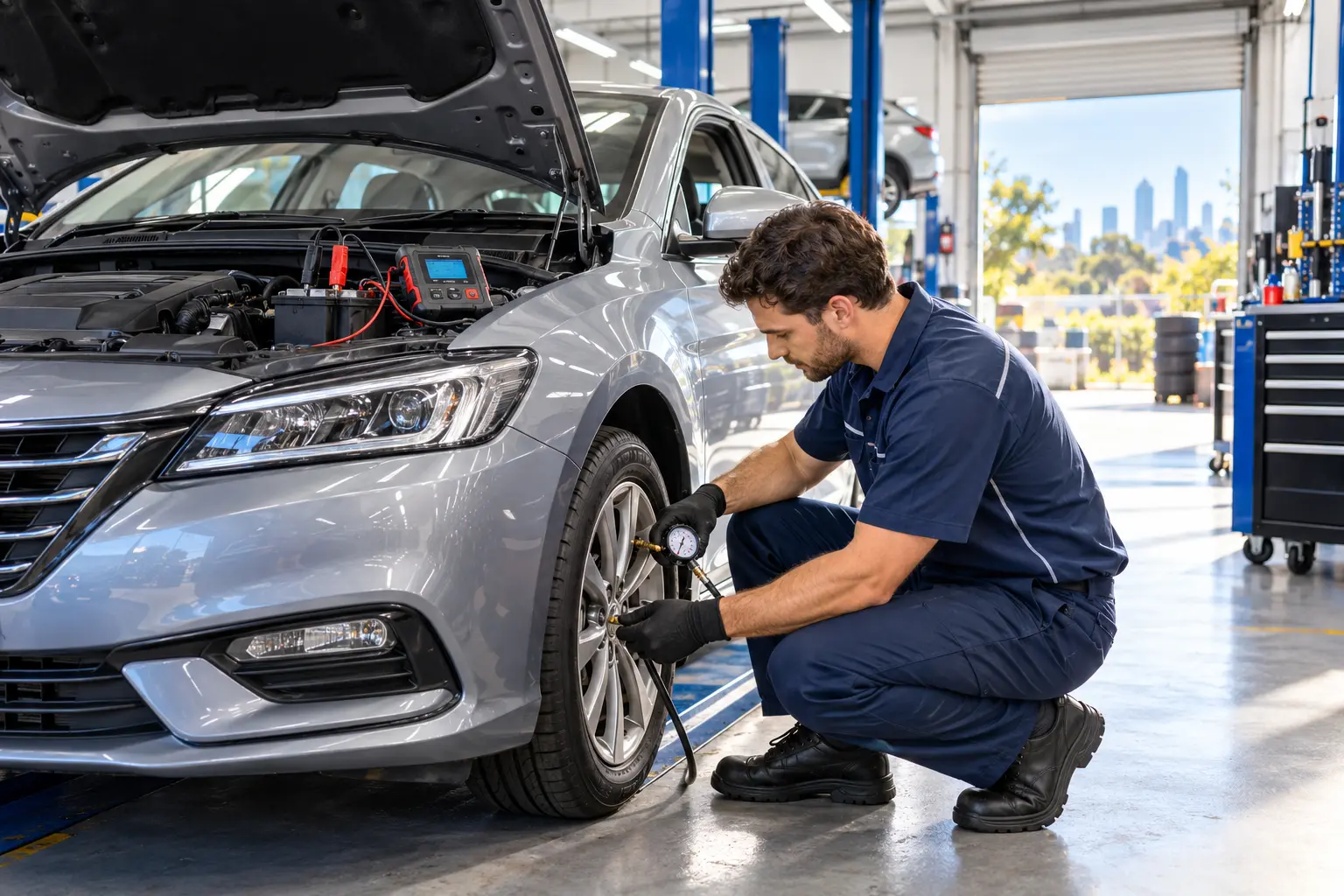
Battery testing can assess condition and starting performance, while charging-system checks help determine whether the alternator and related components are supporting it correctly. Terminals, cables and mounting should also be secure and free from obvious damage or heavy corrosion.
Slow cranking, intermittent starting, dimming lights, electrical warnings or a battery that repeatedly needs assistance deserve diagnosis. Replacing the battery without checking the charging system can miss the actual cause, while repeatedly jump-starting a vehicle is not a maintenance plan.
4. Tyres and brakes carry the holiday load
Summer trips often add passengers, luggage and freeway kilometres. Tyres need suitable tread, even wear, sound sidewalls and the correct cold pressure for the vehicle and load. The tyre placard—commonly found in a door opening or fuel flap—provides the manufacturer's starting point. Pressure should be checked when the tyres are cold because driving and hot weather raise the measured pressure.
Look for cuts, bulges, cracking, embedded objects and uneven wear. A tyre can hold air and still be unsuitable for a long trip. Do not forget the spare where one is fitted, along with the jack and wheel tools. Vehicles using a repair kit should have an in-date sealant canister and a working inflator.
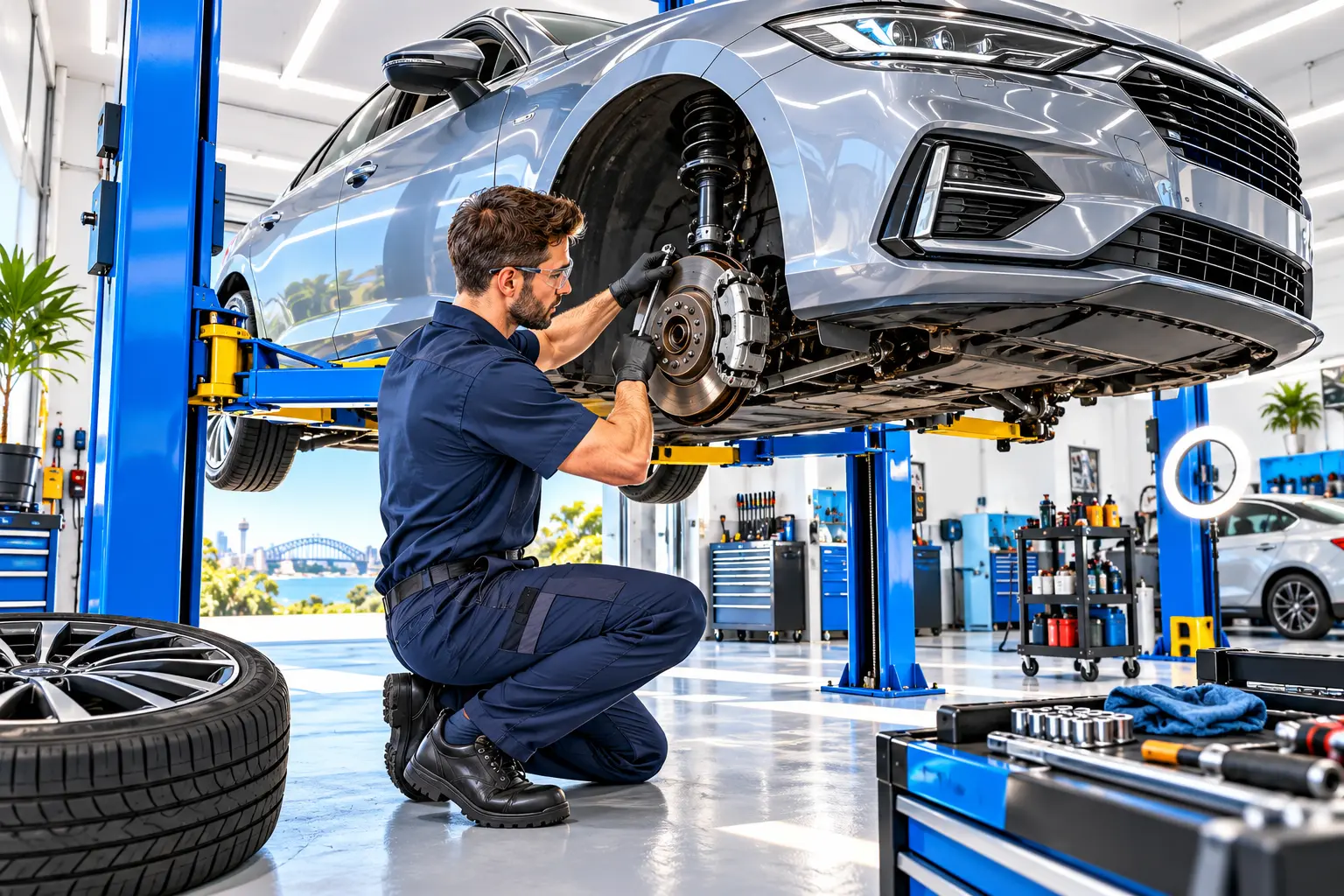
Brakes also deserve attention before a loaded drive. New squealing or grinding, vibration, pulling, a change in pedal feel or longer stopping distance should be inspected promptly. Brake and tyre symptoms can overlap with wheel, steering and suspension problems, which is why a physical inspection is more useful than guessing from a sound alone.
5. Air conditioning is about visibility as well as comfort
An air conditioner that is slow to cool may be inconvenient on a short local trip and exhausting during a long summer drive. More importantly, the ventilation system also supports windscreen demisting when weather changes. Weak airflow, unusual smells, noise when the system operates or cooling that fades after a few minutes are all useful symptoms to report.
Not every air-conditioning concern is solved by adding refrigerant. Electrical faults, drive-belt issues, fan problems, blocked airflow and refrigerant leaks can produce different symptoms. A proper inspection starts with what the system is doing rather than assuming it only needs a quick recharge.
Test the air conditioning before the first forecast hot day. Doing so gives you time to arrange the appropriate specialist work if required, instead of discovering the fault after the car has been loaded for a family trip.
6. Belts, hoses and small leaks can become big interruptions
Rubber components live in a harsh environment. Heat, age, vibration and fluid contamination can contribute to hardening, swelling, cracking or soft spots. A belt or hose may look acceptable from above while showing wear in a less visible area, so workshop access and lighting make a meaningful difference.
Tell the mechanic about squealing after startup, a sweet or burning smell, spots under the parked car or a need to top up the same fluid repeatedly. Photographing a fresh leak before the vehicle moves can also help establish its colour and location, although fluid often travels along panels and does not drip directly below the failed part.
A visible leak is not automatically catastrophic, but it should not be dismissed because the car still drives. Some leaks worsen slowly; others change quickly once the system is hot and pressurised.
7. Allow time between the service and a major road trip
A service immediately before departure is better than no preparation, but it leaves little room if the inspection finds worn tyres, a leaking radiator, weak battery or brake work that requires parts. Booking earlier gives you time to make an informed decision and confirm the vehicle feels right after any repair.
Before leaving, check the fuel range, tyre pressures, spare or repair kit, washer fluid and lights. Pack water for passengers, but do not rely on drinking water as the correct long-term coolant for the vehicle. Carry the roadside-assistance details and know where the locking-wheel-nut key is stored if the car uses one.
If towing, carrying an unusually heavy load or travelling through remote areas, mention that when booking. The workshop can consider the intended use when discussing tyres, brakes, cooling and maintenance priorities.
What a pre-summer car service should achieve
The exact service must suit the make, model, engine, kilometres and maintenance schedule. It may include engine oil and filter replacement, fluid checks, a visual inspection of brakes, tyres, steering, suspension, belts and hoses, battery assessment and a scan or targeted diagnosis where symptoms call for it.
The useful outcome is a clear picture of the vehicle. Work that is due now should be distinguished from repairs that are recommended soon and items that simply need monitoring. A workshop should also explain when a specialist service or further testing is needed rather than presenting every observation as an emergency.
At Total Care Mobile Mechanics, regular servicing is completed at our Hoppers Crossing workshop at 7 Industrial Avenue. The workshop environment gives us proper lighting, access and equipment to inspect the car carefully. Drivers from Hoppers Crossing, Point Cook, Wyndham and Hobsons Bay can call with the registration, current kilometres and service history so we can plan the appropriate booking.
Warning signs that should not wait for a scheduled service
A future service booking is not a reason to continue driving through an urgent symptom. Stop safely and seek advice if the temperature gauge climbs into the hot zone, a temperature or oil-pressure warning appears, steam or smoke develops, the brakes feel unsafe, a tyre is visibly damaged or the engine loses power and runs roughly.
Do not open hot cooling-system components, crawl beneath a vehicle supported only by its jack or keep restarting an engine that has overheated. Call the workshop or roadside assistance, describe the warning and the vehicle's behaviour, and follow the advice for that situation.
The goal of summer preparation is simple: give yourself better information and more time. Servicing cannot prevent every unexpected failure, but it can reduce avoidable risk and make the next hot-weather journey far less stressful.
What drivers ask us.
When should I book a car service before summer?+
Book when the manufacturer's time or distance interval is due, and allow extra time before a major trip so any genuine repair can be completed. If the car is already overdue or showing symptoms, arrange an inspection rather than waiting for hotter weather.
What should be checked before a Melbourne summer road trip?+
The appropriate list depends on the vehicle, but common priorities include the cooling system, engine oil and fluids, battery and charging performance, tyres, brakes, lights, belts, hoses and air conditioning. Tell the workshop about towing, heavy loads or recent warning lights.
Can I just top up the coolant myself?+
Only check the system as directed by the owner's manual and never open a pressurised cap while hot. Low coolant can indicate a leak, and the correct coolant type matters. Repeatedly topping up without finding the cause can hide a developing fault.
Does a normal service include air-conditioning repairs?+
A routine service may identify an obvious concern or confirm that the system is not cooling properly, but air-conditioning diagnosis or refrigerant work can be a separate specialist service. Mention the symptom when booking so the right next step can be planned.
Should I keep driving if my car starts overheating?+
No. Continuing to drive an overheating vehicle can cause serious engine damage. Pull over safely, switch the engine off, do not open the hot cooling system and arrange professional or roadside advice.